Posts

5 Amazing Inventions And Their Inventors

Image
Inventions have changed the way we live our lives, making things easier and more efficient. Here are five amazing inventions and the inventors behind them: The Airplane: The Wright Brothers, Orville and Wilbur, invented the airplane in 1903. It allowed people to travel long distances through the air, changing the way we travel and connect with each other. The Printing Press: Johannes Gutenberg invented the printing press in the 15th century, which made it possible to mass-produce books and spread knowledge and ideas. The Steam Engine: James Watt improved the steam engine in the late 18th century, revolutionizing transportation and industry by making it possible to power machines with steam. The Automobile: Karl Benz invented the automobile in 1886. It changed the way we travel, making it possible to go farther and faster than ever before. The Internet: Tim Berners-Lee invented the World Wide Web in 1989. It has revolutionized the way we communicate, work, and learn, connecting peop...

Amazing Lifecycle Of A Frog

Image
Frogs are fascinating creatures that can be found near the water all over the world. Have you ever wondered how a frog comes to be? Here's a look at the life cycle of a frog. Egg: The life cycle of a frog begins with an egg. The female frog lays her eggs in water, usually in a pond or a stream. Tadpole: Once the egg hatches, a tadpole emerges. The tadpole looks like a fish and has a long tail for swimming. It spends its time in the water eating algae and growing bigger. Froglet: After a few weeks, the tadpole begins to grow legs and lose its tail. It becomes a froglet, which is like a small version of an adult frog. The froglet still lives in the water but can also breathe air and begins to eat insects. Adult frog: After a few months, the froglet transforms into an adult frog. The frog leaves the water and moves onto land, where it will spend the rest of its life. Adult frogs eat insects and other small animals and can jump up to 20 times their body length! Did you know that t...

Strategies for Encouraging a Growth Mindset in Children

Image
As a daycare provider, you play an important role in helping children develop a positive and growth-oriented mindset. By fostering a growth mindset in children, you can help them become more resilient, confident, and successful in their lives. Here are some strategies for encouraging a growth mindset in children. Celebrate effort and progress: Rather than focusing solely on the outcome, celebrate the effort and progress that children make. This helps them see that their hard work and dedication can lead to growth and improvement. Emphasize learning and growth over performance: Encourage children to see their mistakes and challenges as opportunities for growth and learning, rather than as failures. This helps them develop a growth mindset and become more resilient in the face of challenges. Encourage them to take risks and try new things: Encourage children to take risks and try new things, even if they may fail. This helps them see that failure is a natural part of the learning proc...

The Benefits of Collaborative Play for Young Children

Image
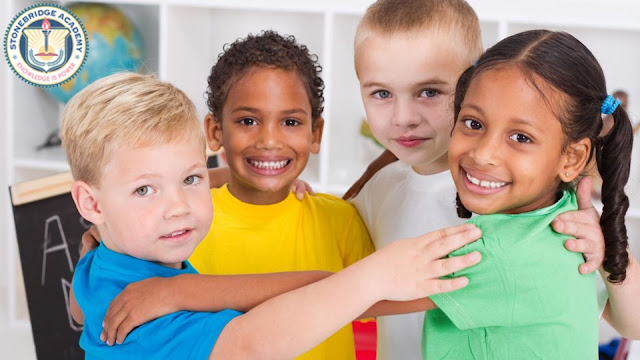
As a daycare provider, you know that play is an essential part of a child's development. But did you know that collaborative play can have even more benefits for young children? Here's a closer look at why collaborative play is important and how you can encourage it in your daycare center. Social and emotional development: Collaborative play allows children to learn how to share, take turns, and communicate with others. This helps them develop important social and emotional skills that will serve them well throughout their lives. Problem-solving skills: When children play together, they must work together to solve problems and complete tasks. This helps them develop critical thinking and problem-solving skills that they can use in many areas of their lives. Building relationships: Collaborative play allows children to build relationships with their peers and develop a sense of community. This is important for their overall well-being and can help them feel more connected to t...

Importance Of Stars

Image
We all grew up hearing the nursery rhyme "Twinkle Twinkle Little Star," and we spent countless nights gazing at the stars. Aside from that, have you ever wondered why there are stars? What are they good for? Is that significant to us? And a slew of other similar questions. If you answered yes, then this informative blog is for you. We have shared 7 points that will give you a basic idea about "Why stars are important".   1. Energy production: Stars, particularly the sun, provide the energy that supports life on Earth through the process of nuclear fusion. 2. Climate regulation: The energy produced by stars, particularly the sun, plays a major role in regulating the climate on Earth and other planets. 3. Stellar evolution: The study of stars can provide insight into the life cycles of stars and the eventual fate of the universe. 4. Formation of elements: Stars are responsible for the formation of many elements found on Earth, including carbon, nitrogen, and oxygen ...

Importance Of Other Planets

Image
 The best qualities in children are their curiosity to think and ask questions about various topics to their parents and teachers. If they are not satisfied with the answer, they will continue to seek it. To be successful, we must all maintain this capability within ourselves. Many of us wonder why there are other planets in our solar system, if they are useful, or if there is anything else we can get from them. To clear up any confusion about "Why Other Planets are Important," we've compiled a list of 7 points that should help. 1. Understanding the origins of life: By studying other planets, scientists can learn more about the conditions that led to the emergence of life on Earth. This can help us understand how life may have originated on our own planet and potentially discover new ways to search for life on other worlds. 2. Climate change and planetary habitability: By studying other planets, we can gain a better understanding of how climate change and other environme...

Teaching Kids About Importance Of Money

Image
   Introducing money at an early age of kids so that they can value and earn money in the coming time. Few guidelines about the importance of money Parents should teach them. According to their age, a few guidelines are given below:                     For 3-5 years: determine the worth of coins. identify items that are expensive While working only money can earn. Have patience for something you really want. Can differentiate wants vs needs. For 6-10 years: Discuss salary and debate. options for how to spend money Comparison of prices. Know how to open a savings account For 11-13 years: They should know how to save money by at least 10%. They should know goal setting. Value of hard work. When don’t have money not need to spend money? Importance of privacy and security. For 14-18 years: How to make a budget. How to write checks. The significance of avoiding credit card debt. What...